



5 Ways Sitting All Day Affects Your Body (and What You Can Do About It)
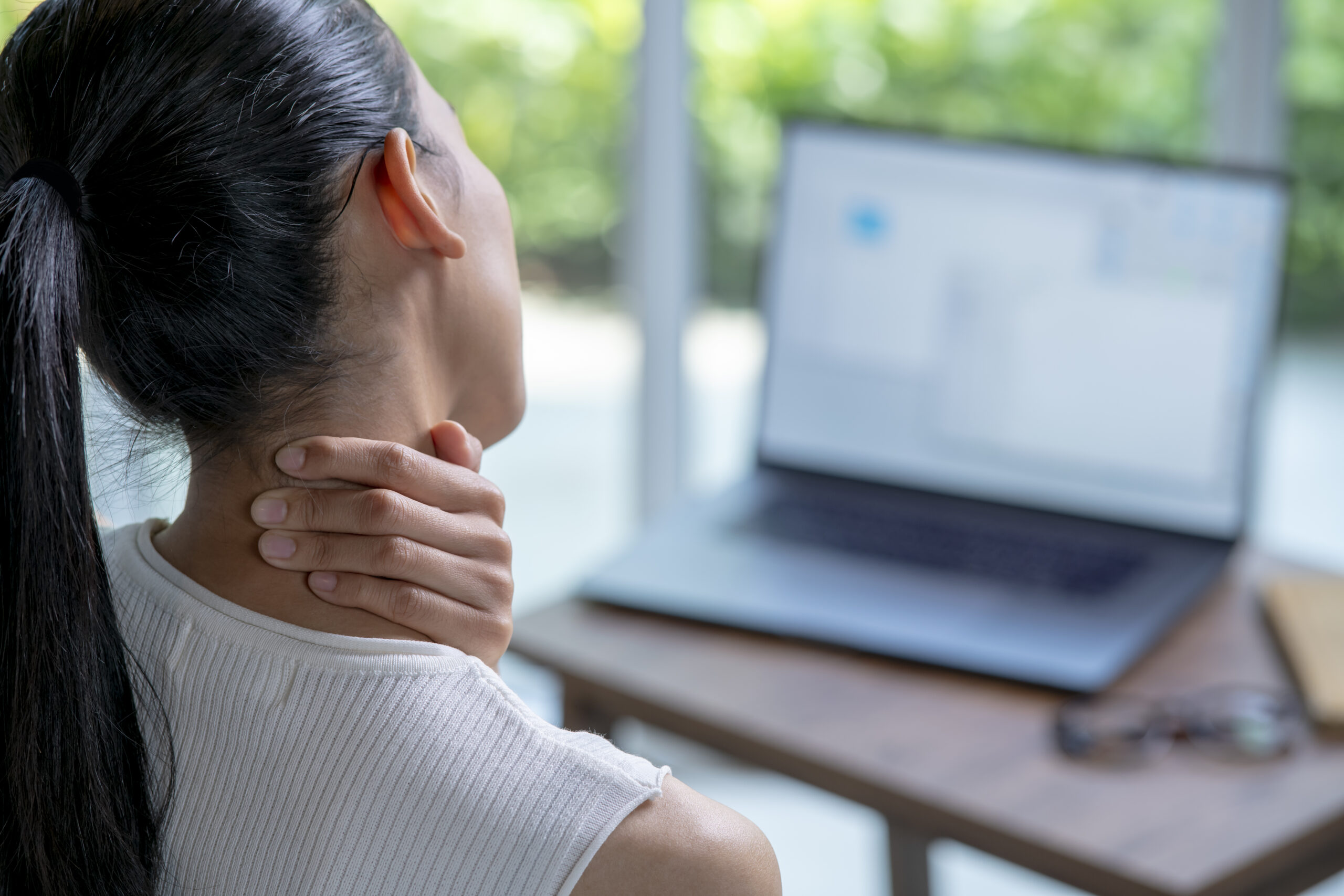
Do you spend most of your workday sitting at a desk? By the afternoon, you might notice your neck feeling stiff, your shoulders getting tight or your lower back starting to ache.
Sitting for long periods can affect how your body feels and moves, especially when you’re spending hours in the same position.
The good news? Small changes to your workspace and daily routine can help. Let’s look at five common effects of sitting all day and what you can do to feel more comfortable.
Effects of Sitting All Day on Your Body
1. Neck Pain and Stiffness (Tech Neck)
If you spend hours looking at a computer or phone, you might find yourself leaning forward without realizing it. This position can put additional strain on your neck muscles, contributing to stiffness, headaches and shoulder tension.
Often called tech neck, this discomfort is common among people who spend long hours looking at screens.
What can help:
Position your monitor so the top of the screen is around eye level.
Keep your screen at a comfortable distance to avoid leaning forward.
Try gentle chin tucks and take regular movement breaks.
Learn more about the causes and symptoms of tech neck and how chiropractic care may help.
2. Rounded Shoulders and Upper Back Tension
When you’re focused on your work, it’s easy for your shoulders to gradually round forward. Spending hours typing or using a mouse can also leave the muscles around your shoulders and upper back feeling tired or tight.
What can help:
Keep your keyboard and mouse close to your body.
Relax your shoulders and keep your elbows comfortably at your sides.
Try gentle chest stretches and shoulder blade squeezes throughout the day.
Remember, there’s no single perfect posture. Changing positions regularly is just as important as having a comfortable desk setup.
3. Tight Hip Flexors
Your hip flexors are a group of muscles that help you lift your legs and move your hips. When you sit for long periods, these muscles remain in a bent position, which may contribute to feelings of tightness or stiffness.
You might notice this discomfort when standing up after work, going for a walk or returning to your favourite activities.
What can help:
Get up and move every 30 to 60 minutes.
Try gentle kneeling hip flexor stretches.
Include regular walking and hip-strengthening exercises in your routine.
If hip discomfort is affecting your workouts or daily activities, learn more about hip flexor strains and treatment options.
4. Lower Back Pain and Stiffness
Your lower back helps support your body throughout the day. However, staying seated for hours without changing positions can leave the muscles and joints around your lower back feeling stiff or uncomfortable.
An unsupportive chair or poorly arranged workspace may also contribute to discomfort.
What can help:
Sit in a comfortable position with your feet supported.
Use a small cushion or rolled towel if your lower back needs extra support.
Take short walking breaks to change positions and keep moving.
Even a few minutes away from your desk can help break up long periods of sitting.
5. Reduced Glute and Core Muscle Activity
Your glutes and core muscles help support your hips, spine and everyday movements. While sitting doesn’t automatically make these muscles weak, spending too much time inactive can contribute to reduced strength over time.
Regular exercise can help maintain the strength and stability you need for activities like walking, lifting and exercising.
What can help:
Try glute bridges to strengthen your hips.
Include bird dogs to work on core stability.
Add bodyweight squats to your exercise routine.
Not sure where to start? Our kinesiology team can help create a personalized exercise program that works with your schedule and fitness goals.
Simple Ergonomics Tips for a More Comfortable Workday
You don’t need an expensive office setup to make your workspace more comfortable. A few adjustments can help reduce unnecessary strain and encourage better movement throughout the day.
Try these simple ergonomics tips:
Adjust your monitor: Keep your screen about an arm’s length away, with the top at or slightly below eye level.
Support your feet: Adjust your chair so your feet rest comfortably on the floor or a footrest.
Keep your wrists comfortable: Position your keyboard and mouse so your wrists can remain relatively straight.
Change positions: If you use a standing desk, alternate between sitting and standing.
Take movement breaks: Set reminders to stand, stretch or walk throughout your workday.
The goal isn’t to maintain perfect posture all day. It’s to find comfortable positions and give your body opportunities to move.

Frequently Asked Questions About Sitting All Day
How long is too long to sit at a desk?
There’s no single limit that applies to everyone. However, the Canadian 24-Hour Movement Guidelines recommend limiting total sedentary time to eight hours or less per day and breaking up long periods of sitting as often as possible.[1]
If you work at a desk, try incorporating regular movement breaks into your routine.
Can a standing desk improve posture?
A standing desk can make it easier to change positions, but standing all day isn’t necessarily better than sitting.
The best approach is to alternate between sitting, standing and moving throughout the day.
What helps with tight hip flexors from sitting?
Regular movement, gentle stretching and strengthening exercises may help relieve hip tightness.
If the discomfort continues or affects your daily activities, our physiotherapy team can assess your movement and recommend exercises suited to your needs.
Should I see a chiropractor or physiotherapist for desk-related pain?
Both may help, depending on your symptoms and goals.
Chiropractic care may help manage certain types of neck and back pain and improve joint mobility.
Physiotherapy focuses on improving movement, building strength and managing pain through personalized treatment and exercise.
Massage therapy may help relieve muscle tension and promote relaxation.
At Strive Health & Performance, our team can help you explore the treatment options that best suit your needs.
Is treatment for posture-related pain covered by insurance?
Many extended health insurance plans include coverage for chiropractic care, physiotherapy and massage therapy.
Strive Health & Performance also offers direct billing to participating insurance providers. Be sure to check your individual plan for coverage details.
Feel Better at Your Desk and Beyond
Don’t let desk-related aches and stiffness slow you down. Visit Strive Health & Performance in Coquitlam, Brentwood or Port Moody for personalized care to help you move more comfortably.

Emily Smith, Registered Massage Therapist
Emily has been a registered massage therapist for 9 years, specializing in the low back, hips, and neck, and has extensive experience treating pre and postnatal women and children.